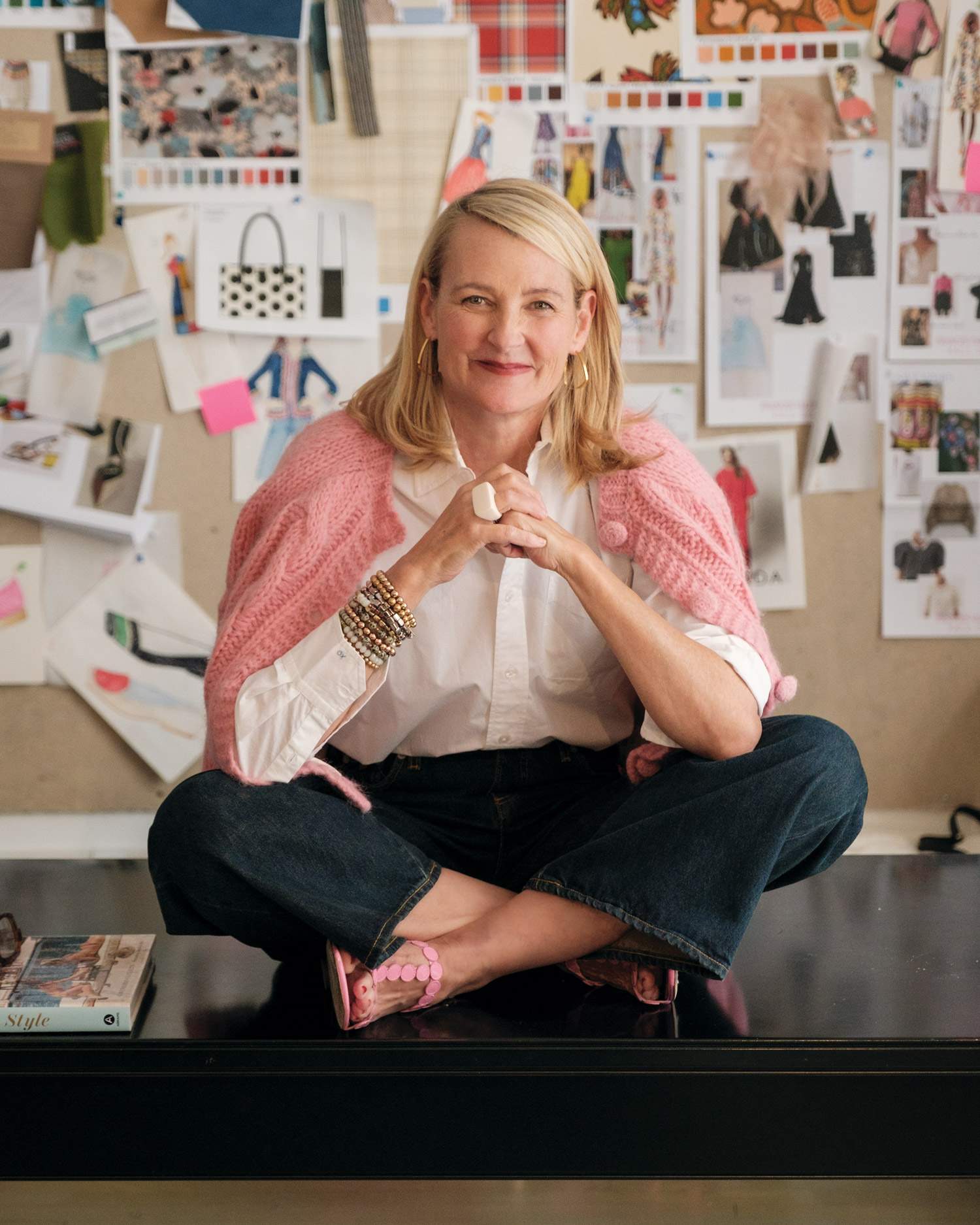


I recently interviewed Madison Reed Founder and CEO Amy Errett on my podcast, Thirty Minute Mentors. Here is a transcript of our interview:
Adam: Our guest today started and leads a business that disrupted the world of hair care. Amy Errett is the founder and CEO of Madison Reed, which has served us more than 5 million customers since inception. Amy, thank you for joining us.
Amy: It is a pleasure to be here. Thank you for having me.
Adam: Pleasure is mine. You grew up in New York, in a working-class family and you did your undergrad at UConn before going into banking and kicking off your career in business. Can you take listeners back to your early days? What early experiences and lessons shaped your worldview and shaped the trajectory of your success?
Amy: Yes, I’m a proud New Yorker, ex-New Yorker, I guess, and Go Huskies. So I’m also a big UConn fa. I am on the board of foundation trustees, there’s some pretty involved. So my career, I was happy to get a job coming out of college. And I was fortunate enough to end up at a cool bank and learn financial services. And early in my career, I was motivated by just the market and understanding the consumers. But then I pretty quickly moved into a general management track. And that became a career of wanting to invest in other people’s careers and see their genius and build great teams. And so I was really lucky that I was able to marry banking together with managing large groups of people at a young age.
Adam: And you’ve enjoyed an incredibly successful career. Long before becoming the founder of Madison Reed, you started and sold a company in the financial services space, you were a senior executive at E-trade, and you were a partner at a VC firm just to tick off a few of the things that you did. What were the keys to rising within your career? And what can anyone do to rise within their career?
Amy: So I think it is three things. One is every career starts and ends with people. And that means the relationships that you formed, the understanding of who accompanies serves, and where you fit into that food chain. And so kind of understanding people and meeting people where they’re at. Number two, I think that I’ve always been curious. And so my career has gone through a lot of different changes as different subject matters. But I think the curiosity of being like a continuous learner and just like paying attention, and as I say, following the trickle of water, I didn’t know much about hair color, or when I decided to start Madison Reed, I didn’t know how to be a VC. But I paid attention. And then the third thing is having a certain amount of persistence and resilience, learning taking your time, and not being in a hurry. And then that all culminates with, I think, probably it was maybe 10 years ago that I realized this notion of finding my genius, sort of what is that one thing that effortlessly comes through me, that’s kind of a superpower versus all the things that I thought I was supposed to be great at. And realizing I’m not great at all those things, and then scribbling down on the thing, that’s the superpower.
Adam: So much great stuff there. And I want to dive into all of it throughout our conversation. How did you discover your genius? How did you discover your superpower? And how can anyone do the same?
Amy: So I think it starts with a lot of self-work. I’ve always thought that the key to being a great leader is to understand yourself on a deeper level and have this one great thing that is hard to have, which is called empathy. And having empathy for other people and situations goes a long way. And what happened to me, which is sort of interesting, is I got fired. And I always think about it. This is the greatest gift that ever happened in my life. It didn’t seem like a gift, trust me in the beginning, but it started to make me understand that I was doing something that wasn’t my superpower. And it wasn’t my genius. And then instead of just curling up in and feeling bad and sort of being a victim to what happened, I started to go deep into, okay, what is the thing that effortlessly comes through me? Where are my blind spots, as I call them, the things I’m not great at? And then could I craft a career out of tripling down on that thing that I think I’m great at, and then letting go of the ego, which, by the way, is one of those things in life that serves a great purpose, but at a level in your life, kind of not understanding your ego and where it is, it’s separate from the good stuff, and that not so good stuff, I started to be able to understand that so many other people are better at the things that I’m not good at. And then just being honest about that. So it came honestly, though not something that I chose, I look at everything that happens in life as having a reason. And the question that I’ve asked myself, is, what’s that teaching me? What part of life’s presence can I be in to learn something about the journey that makes life happier?
Adam: And that’s the mindset that everyone needs to attain greatness. Curiosity, continuous learning, commitment to knowing thyself, empathy, humility, you’re hitting on all the key themes. You spoke about this seminal moment in your journey, getting fired- the greatest gift of all? Oftentimes, when we experience major setbacks, as you described it, the last thing we want to do is get up and start running. We’re not in that place. We’re not in that mindset, we’re sulking. How were you able to shift from being down and out to starting to do the work that ultimately brought you to the place where you can start working on yourself and ultimately discover your genius, your superpower?
Amy: So think the first place it starts is did I have a willingness to own part of what happened? So my 100%, as I say, in life, is that if everybody owned their 100%, the world be a much easier place to be in. Like, this didn’t happen to me. I wasn’t very happy with what I was doing. And I was avoiding the inevitable piece of me not being happy, me not making choices, rather than thinking I had to be doing something. And if I just worked harder, I just tried harder, it would work versus it just wasn’t good for me. So I embraced what part I own in this. And I started to look at the patterns of my behavior, I started to be open to the universe presenting new opportunities for me, even when I wasn’t open to them myself. After getting fired, I became a VC. It’s a long and windy road, about how that happened. But it was through half connected to where I got fired from that wanted to invest some money and that they got in touch with me about like, “Hey, what happened?” And we ended up in the place of Would you like to come to work with us so there you go, the universe does these things. And then if it’s right in front of you, when things get presented for a reason, if I had never gotten fired, I would have probably been a VC. And if I had never been a VC, I’d never start Madison Reed, I wouldn’t have learned as much as I learned about being an investor. And then ultimately, I liked being an operator more than I liked being a full-time investor. And then I tell this really funny story and it’s bizarre. A lot of my life comes back to the kid, the kid called Madison Reed, known as TMR in the company, the Madison Reed versus Madison Reed, the company. And TMR was not very old. And of course, I came home from the day I got fired. And I told my wife with absolute confidence that we had to tell TMR that would happen. And my wife responded by saying, “Amy, she’s four or three, she has no idea what you’re telling her.” And I said, “No, it’s important.” And it was bizarre. And my wife turned and said, “Madison, I have good news for you. Mommy works at home now.” And out of that experience of my kid taking me by my hand, walking me up a set of stairs to my home office, and with her hand, she waved towards my chair, and she said, “Mommy, welcome. We’re so happy to have you.” And it was like all the moments of all the things by Wharton degree like all the analytics just melted away at that moment, and I was like, wow, okay, I get it. Everything I’ve been paying attention to wasn’t really important. And right here, all the answers lie if I’m willing to look at my role in this. So I just went down a long path of self-discovery and therapy. My therapist told me this funny story and she said, “Whatever happened when you got fired, take the face of that person and put it up on your mirror.” I said, “What do you mean?” She said, “Oh, no, no, you need to thank that person every day. That will remind you about why you’re on this journey.” And so I just started to do a lot of things. Meditate, get more into my presence, and understand myself and patterns of behavior that haven’t served me. It’s a long-winded answer to kind of say to you that in every single thing in life that happens to us, there are dots that one can connect if you’re open enough to receive the fact that the way that you might do things needs to evolve, be curious, have resilience. And life is like, what’s the whole game about that at the end? I think this is the essential question if we could answer that. But for me, it’s about whether can I choose a life where I make an impact. And can I choose a life where I can look at it and be like, “Hey, my job is to have an impact and be happy every day.” Like that is self-discovery. That’s what we want for our kids. That’s what you want for the people in your life. You want them to find their lane. And sometimes you have to swim a lot of lanes to find your lane.
Adam: Wow, Amy. You shared so much great stuff there. Reframing the way that we look at the negative experiences in our lives. I love the advice that your therapist gave you. We have moments in our lives, we have moments in our careers that we look back at and say, “I wish that never happened to us. I wish I could turn back time. And if only I could undo this or undo that.” But instead reframing, rethinking, completely changing the way you look at those experiences, being grateful for what happened to you, the good, the bad, the ugly, and finding joy not only in the end goal but in the journey.
Amy: It’s all about the journey. I get up every single morning and I think to myself, three things: One is I got a busy schedule. Two, I think I am so grateful for exactly where I am even the moments as you said that may not be identified as pretty or seem like they’re positive. And then the third thing I think is like, what a life, what an experience that I have to still be making an impact and learning from people around me. And I’m a working-class kid. You started with that question. I have so much gratitude for all of the things that I’ve experienced. And yeah, I think it’s about being happy. I do. And I think it’s about carving yours and how you’re happy is not the same for the person next to you. And we never know each other’s stories. We never know each other’s agony or each other’s glory and have more empathy for the person. I do this thing a lot. stand in Starbucks, and I buy coffee for somebody behind me. It’s one of my little passion things that I do. And I’ll just go up and I’ll order my coffee. And I’ll just pay for that person. Kindness is free. And it’s a wonderful gift to give yourself. You think you’re giving it to somebody else. But I’m buying coffee because it’s a good gift to give me.
Adam: How can we pay it forward every day in small ways? You don’t need to save a human being’s life every single day. But what’s a small thing you can do to contribute in some way? Is it responding to the email of a stranger? Is it opening the door for someone else? Is it paying for someone’s coffee? What is it?
Amy: Is it walking into one of my stores where a person standing on their feet for eight hours a day doing somebody else’s hair and having the founder and CEO know their name and hug them? Let’s say thank you. Is that hard? No. That’s just human. Thank you for working so hard. Thank you. I see you. I want to be seen in the world. Don’t you want to be seen? We all want to be seen. We want to be valued for our contributions. And I don’t know, I think we’ve lost that. And it’s a passion point for me in life.
Adam: It’s not any harder to be nice than it is to be mean or than it is to be indifferent. It just comes down to your mindset.
Amy: Exactly. I’m going to say this and this will be controversial for people that listen to this, like this lady’s crazy. And yes, I am by the way. I am a little crazy. And I think the world should live more in the crazy, by the way. The craziest first things get fun. Think about it this way, how much does it cost to be doing that? And would the world be a better place if we all could think about the possibilities of spreading that unconditional love and kindness? And it is always baffling to me. And yet, it’s a good place to live. And that is not to say that there aren’t real problems that I have in my life or business or that walking down the street every single day, the world is sunshine and roses. It’s reality. I guess the last thing I’ll say about this is, let’s just be messy. And in the messy is where you learn more. It’s not when things are just cruising along, it’s in the messy, we learn.
Adam: And a key theme of this entire conversation, whether you’re experiencing something clean, experiencing something messy, really comes down to taking ownership of every day of your life, ownership of every experience that you have, going all in, living life to the fullest. There are going to be ups, there are going to be downs, there are going to be highs, there are going to be lows, but bringing it every single day, being open to the possibilities, and recognizing that there is no linear path. But wherever that path takes you, bring your best effort. Get at it.
Amy: I want to make every day count. I just do. Like I don’t know how many more I have or anybody else has. But I want to make sure that every day that I’m alive, and I’m making it count for me, the team that works at Madison Reed, that people interact with my family, I just want to make an account. And I want to be accountable for that.
Adam: You run a substantial company. How do you find people like that? How do you surround yourself with people like that?
Amy: So I talk about this all the time. Hopefully, this is helpful to some entrepreneurs listening. But in our company, we have a whole bunch of products, it looks like on the surface, our product is hair color, and it is. But we also have an internal product. And that is called our culture. Our cultural values are our internal product. It’s what we promise our team members that we deliver and that we hold ourselves accountable for. And so if you live that mantra, you know how to hire, because your cultural values are the guideposts. They’re the North Star for who you should be hiring or the things that we want to offer, things that we believe in, that Madison Reed believes in, our five values, the things that you value. It shouldn’t be hiring people that don’t believe that and they shouldn’t come to you and waste their time. It’s just one of those easier transactions that I talked about. So the first week that we were in business, we didn’t have a hair color. I didn’t know how to make one. But I knew that the cultural values were important. And so how we hire people is we screen against that—a combination of things. So you’re hiring always on two levels. One is on content. If you’re hiring somebody for your FP&A Group, they need to be a good accountant or they need to understand finance. But what I call the how, is the content, the why. It’s what I always scream for. Why do you want to come to work here? We ask questions, we get a little weird, and we do this thing called the Enneagram. You don’t have to take it most people want to take it. It’s e-n-n-e-a-g-r-a-m. It’s a rubric. There’s been tons of Myers Briggs, there’s been all sorts of them in the history of time. It’s a super easy one. And it’s a belief system that there’s one of the nine personality types. And those personality types are very clear about how you behave in stress and how you behave in good times. And we shine a light and help people understand what the job content is, and how we do things at Madison Reed. What we believe in, in our values, the kind of culture that you want to work in, and what motivates you. So one of our values is love. It’s a very controversial value. There’s a Stanford Business School case written about it that I teach and a bunch of very smart people debate whether love can be a value in a company. Can love be a value in a company? And I’m the one standing there going I can’t believe you’re asking this question. Because when we asked about our values, somebody asked me like, “Well, why does love have to do with work?” That’s not a good fit for us. Because I want passionate people. I want people who desire to want to come to work and be engaged and involved and believe in the mission and purpose. To me, that’s love. Our interviews vet for values, our interviews vet for do you want to be part of this community. Do you believe in the mission that we believe in? We’ve done a lot of work here. I think we’re pretty good at this point. But it’s taken years of knocking at it.
Adam: So Amy, you’re a graduate of UConn. We could spend the entire podcast just talking about college basketball.
Amy: We could. We’re number one.
Adam: And that’s evergreen because UConn is always number one. Just to clarify UConn women’s basketball is always number one. UConn men’s basketball had some great years. And sometimes number one, not in the top 25, you never know. But those Jim Calhoun years were really good. An early guest on Thirty Minute Mentors was Bill Walton, one of the greatest college basketball players of all time, if not the greatest college basketball player of all time. Something that Bill Walton shared with me is that one of John Wooden’s greatest regrets is that when he was putting together the pyramid of success, he left out perhaps the most important principle, which is love. So, to anyone who thinks that love as a principle for success is controversial, take that up with Bill Walton. Take that up with John Wooden, take that up with Amy, take that up with me.
Amy: Like, shouldn’t we aspire to spring out of bed every morning and kind of look at our life, all the viewpoints of it, and think, wow, I got some areas to improve here. But I’m sort of in love with this. Like, don’t people deserve that? And I think the absolute answer is yes. And so I try to tell people all the time, what is standing in your way of believing that? And also what’s standing in your way of creating that? Why? And so when you ask about the zone of genius if you don’t go on a quest to find out what your zone of genius is, you’re never going to feel that way. Because you’re just going to be pushing a rock up the steep hill. Versus like, this is a glide path. It’s effortlessly flowing through me. It just got me in the flow. I’m in the groove, it’s happening. And then, oh no, I think you’ve just got to move a lot of things out of the path.
Adam: Another big part of your company culture, is diversity and inclusion. Starting with the composition of your workforce, the majority of your employees are black, indigenous, and other people of color. The majority of your employees are women. And nearly half of your employees are women who are black, indigenous, and other people of color. As a leader, why do you especially value diversity? And what can leaders do to build truly diverse and truly inclusive organizations?
Amy: Love this question. We have a saying at Madison Reed and it goes like this. The things that make us different, make us. and it’s a saying that we came up with really early because first of all, there’s a good business reason. So I will come back to the reason that I feel with my heart, but I’m gonna tell you a good business reason. First of all, the world is more diverse, and the workforce is more diverse, whether that be skin color, socioeconomic, gender, gender identity, or geographic diversity. And so as a business person, you have to look at yourself and say, wouldn’t I want to have a whole world of people I can recruit from? So just opening the funnel of the fact that it just brings more qualified candidates, one. Two is that I’ve come to understand that better answers come from diversity, a different viewpoint of opinions. If you are only having one kind of person tell you who your customers are, guess what? They’re going to tell you, the ones that look like them. And they’re not going to have an understanding of the full world and what’s changing and moving and where you need to innovate. And then the third thing is that when you invite people to bring their full selves to work, guess what you’re saying? I want you to bring your best self. I want your creativity, I want your ability to put your stamp of being seen on this. Productivity just gets better. So there’s a whole bunch of business reasons. And then there’s the reason which is, that I believe that your customer’s experience is directly correlated to your team’s experience. There is no question. Call a credit card company and see whether the people are grooving on answering questions. No, the answer is they don’t love working there. They don’t like that customer service is not treated as a priority in the company. But meanwhile, they’re dealing with passionate customers. In our business, it’s a personal business. Your hair is your identity, the fact that I want my team members to be thrilled about the first efficacy of our product. Second, the sustainability of our product. We have the 8-Free formula. It’s a product that has the lowest chemical profile. Again, you’re standing, putting a hair color on somebody’s head for eight hours a day. Do you want to be inhaling ammonia all day long? Is that a way to put people in a workforce that makes them happy and productive? I take it seriously that the thought process about diversity is a good world reason. But it’s also a good business reason to embrace that. And we’re serious about it. Like we have a lot of things that we do in the company that are not just episodic but institutionalized to honor diversity. And actually, like we have a DEIB group (Diversity, Equity, Inclusion, and Belonging). I put the word B in because it’s belonging. I think a lot of people that have tried this in the workplace, want to recruit a whole bunch of diverse people, but those diverse people don’t feel like they belong. So you can’t make that happen when fewer people feel like they’re welcomed and belong. And we have a cohort, anybody in the company can decide they want to be in it for six months, and we pay you. People are like, why would you pay somebody to be on a diversity, equity, inclusion, and belonging effort? Well, why wouldn’t I? I’m asking them to do something in the company that’s beneficial to the greater good. The kinds of things that DEIB group does are just extraordinary. It’s listening circles. We have listening circles in the company all the time. We’re people, it came directly out of what happened with George Floyd right at the beginning of COVID, where I became really clear that I had no clue. As a white person, I had zero clue. I thought I did. But I didn’t until a store manager wrote me a note. And I thought I was woke to telling the company, how cool we were in what we were doing and how my heart was breaking. But I didn’t have a clue what it was like. So I had to go back to basics to understand that we had a lot to learn about. We went to work, did the training, and listening circles, got educated and understood surveys all the time, and had events that shared each other’s cultures. It’s cool. It’s a meaningful part of the work and it’s made me a better person, number one, a better leader, and it’s made us a better company.
Adam: And everything you’re sharing is right at the heart of great leadership. Great leaders are great listeners, great leaders are committed to finding the best people committed to making the best decisions, and committed to creating customer-centric organizations. How do you create a customer-centric organization, you just gave as good a tip as any, build a happy workforce, your employees are happy, and your customers are gonna be a lot more likely to be happy.
Amy: People make it a lot more complex than it is it’s pretty darn simple. If I choose to come to work every day, and I feel like I’m growing and fulfilled, that is just going to come through the pores of the organization. And we find that it does.
Adam: What do you believe are the key characteristics of a great leader and what can anyone do to become a better leader?
Amy: So the first I think is all about your self-awareness. That’s where it starts. Some of the leaders that I would not want to emulate or people who just are wired or haven’t been evolved enough to be self-aware that leadership is an understanding of how do people see you. And so self-awareness, number two, you have to cultivate the art of actually understanding that you serve at their pleasure. I serve at the pleasure of my board. I serve at the pleasure of my customers, and I also serve at the pleasure of our team members. They’re my customers As my customers are my team members, I think great leaders understand that they either can think I’m in charge, or they can think I just happened to be part of the tribe that is making a different call every day. Because my role and responsibility are different. So I think it’s self-awareness. I think it’s learning how to meet people where they are, it’s not about where I am. I don’t need you to come towards me about my style, I need to prove to you that I see you for your talents that I motivate you, and that I’m invested in your success. And then the third thing is, I think it’s the ability to be able to have open, authentic, and honest communication. Because you should always be giving meaningful feedback and receiving meaningful feedback. Continuous learning comes from your ability to have an openness to learn. And I’ve been doing this for a long time and a while. I am learning every single day, I probably learned 20 things today that are going to make me a better leader, hopefully. And I look forward to that. I’m excited about it.
Adam: When we started off the conversation, and I asked you, what were the keys to rising within your career, the first thing you said was, it starts and ends with people. And how do you build relationships with people? You meet people where they are. How do you lead people? How do you lead teams? Meet people where they are. We all know the golden rule. It’s a pretty good rule. Treat people the way that you want to be treated. But as a leader, it’s a really bad rule. Because what happens if the people around you don’t want to be treated the way that you want to be treated? I’m a believer in the platinum rule. Treat people the way that they want to be treated.
Amy: Exactly. I think that I am a servant leader. That’s my mantra in life. I’m not a leader that starts from title or status. And I think that servant leadership comes from the platinum rule. That’s where it emulates.
Adam: Amy, what can anyone listening to this conversation do to become more successful personally and professionally?
Amy: So first of all, I think people have to understand what the entrepreneurial journey is. And there’s a lot of stuff about the fact that people make it very sexy and that it’s just all nirvana. And it’s not, by the way. It’s not for the faint of heart, as I call it, it’s for those who are self-aware, and who are heading right into the eye of the storm, as I call it every single morning, knowing that you can’t ever know what you don’t know until it’s too late that you should have known it. And so continuous learning, eyes wide open, a sense of gratitude, a sense of understanding your genius. Many people should not be entrepreneurs, just like when I was a VC, somebody would say, “How do I come get venture money?” And I used to say, “Well, first of all, you have to have a company that has the formula to be venture-backed.” Most companies in the US should not be venture-backed by the way. They shouldn’t. And so it’s the same thing about being an entrepreneur. It’s the same thing about leadership. Some people shouldn’t be leaders, some people should be entrepreneurs, many people shouldn’t, and many people shouldn’t venture back. So there’s not a formula. It’s in understanding your genius. I also talked about different zones, there’s a zone of genius, and there’s a zone of competency, and there’s a zone of incompetency. We all kind of know the zone of incompetency. But many of us don’t know the zone of competency. That’s the zone that screws you up. Because that’s the zone that most people will think that’s my zone of genius. No, not really. That’s just the zone that you’ve learned or the education system has told you you’re supposed to be good. Like I went to Wharton, right? It’s supposed to be great at everything. You had to be great at everything. And I learned pretty quickly. Amy should not be a CFO. Nope. And so I think it comes back to understanding yourself. Isn’t that what life’s journey is about? Isn’t that the exciting part of what we’re all after is understanding ourselves, loving ourselves, figuring out where we fit into this great mosaic of the world, and then carving our space? And I think if we have the honesty to do it with ourselves, even in the challenging moments, well, life just gets better. It just gets better.
Adam: Amy, thank you for all the great advice and thank you for being a part of Thirty Minute Mentors.
Amy: It’s been my absolute pleasure. Thank you for having me.